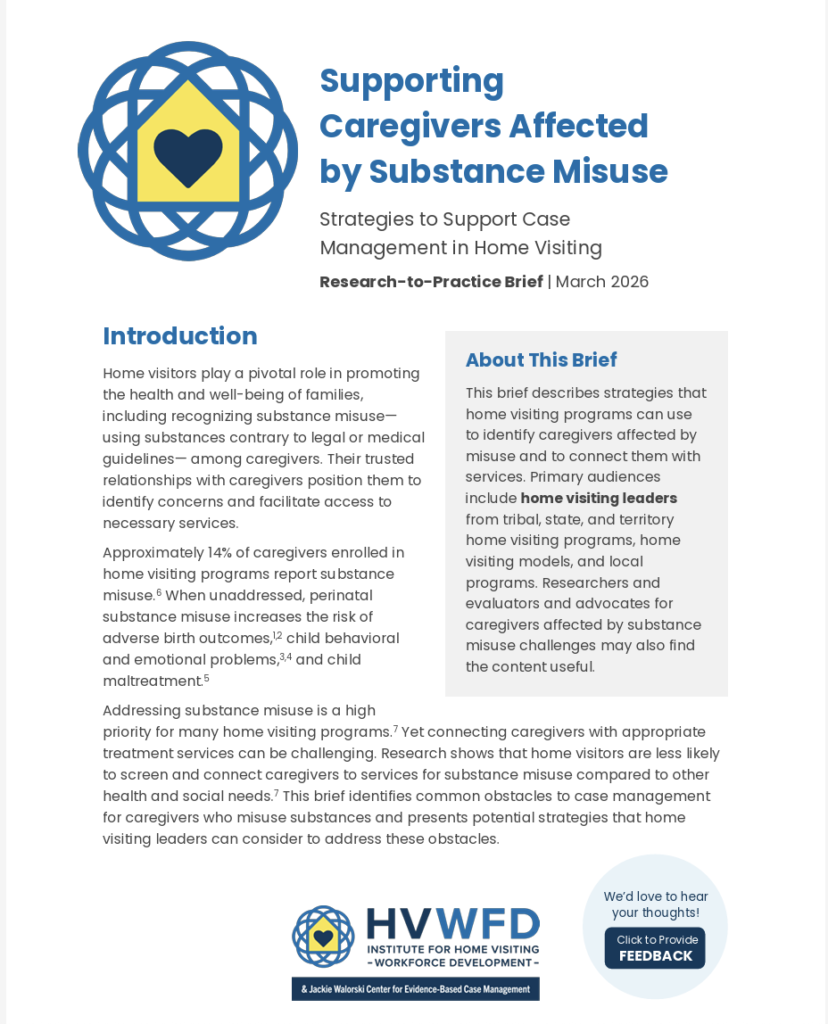
From briefs and toolkits to videos and tip sheets, every resource here was created by our project team to support the people doing this work, informed by the National Strategy for the Home Visiting Workforce. Search by keyword or filter by category to find what’s most useful for your role.
The Institute for Home Visiting Workforce Development has developed four Professional Development Plan (PD Plan) Templates to support home visitors and their supervisors in developing clear and feasible professional development plans:
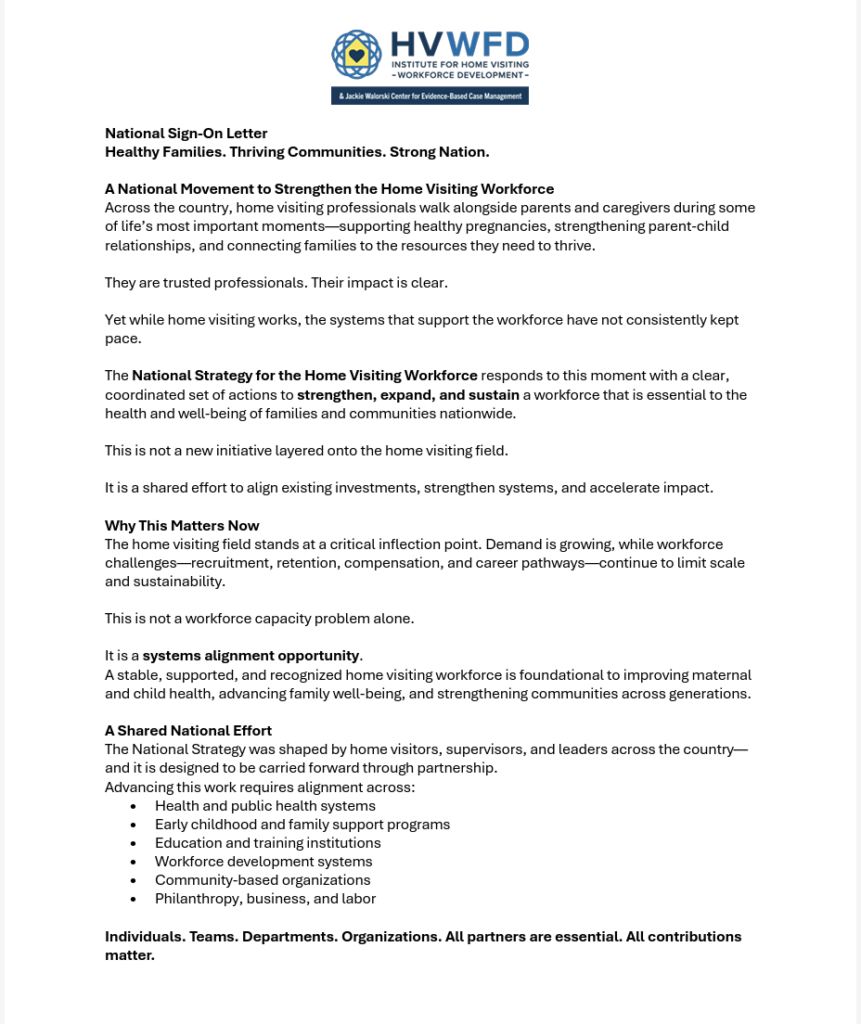
This letter symbolizes a commitment to a growing national movement to strengthen the home visiting workforce and commit to advancing this shared vision:
A respected, supported, and sustainable workforce that enables families to thrive.
We recognize that achieving this vision requires coordinated action across three areas:
Creating pathways into home visiting careers so more people can enter, grow, and lead in the field
Strengthening the workforce through fair compensation, high-quality learning, and opportunities for advancement
Supporting workforce well-being so home visitors can sustain their work and continue to serve families effectively
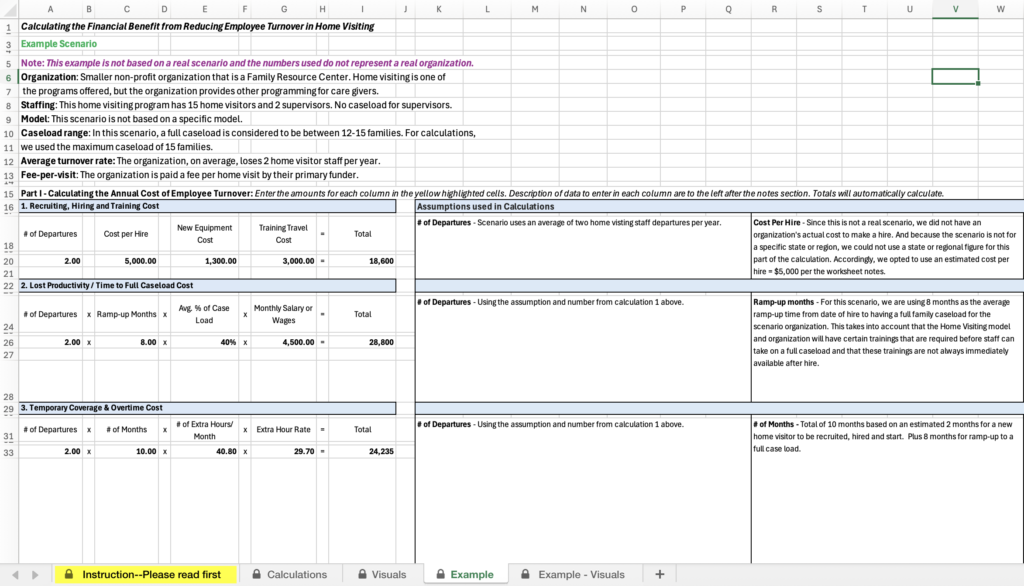
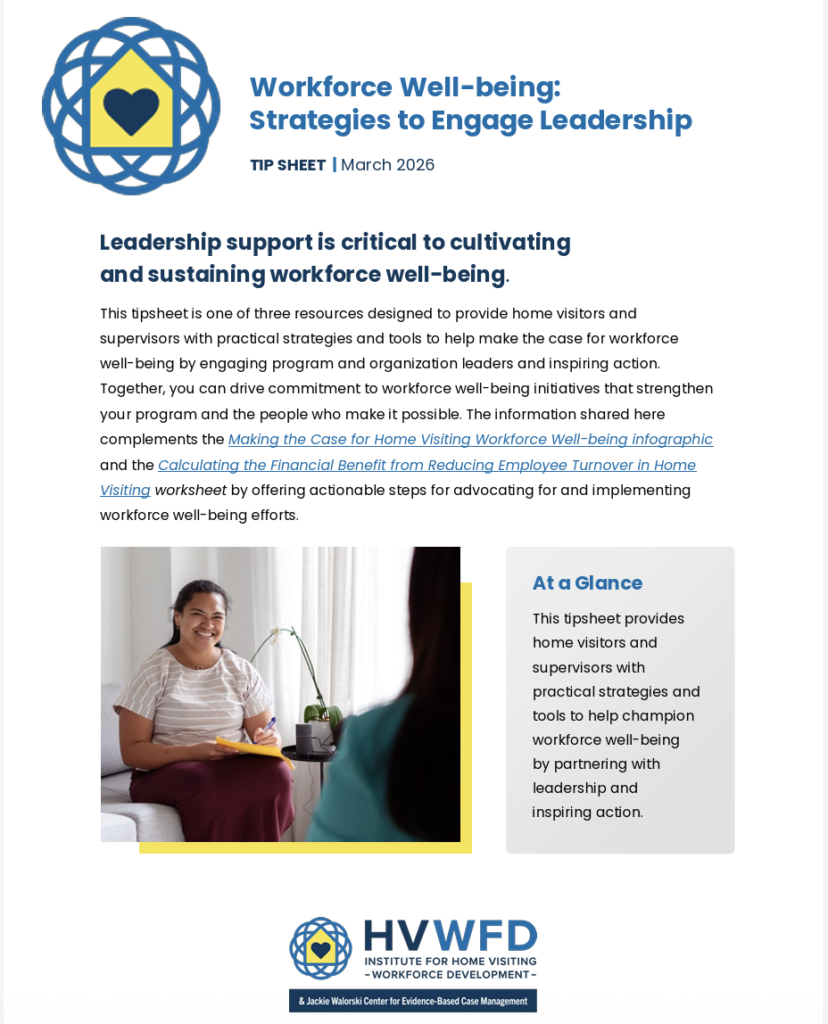
This accompanying Excel worksheet is designed to help supervisors and program leaders quantify the true cost of staff turnover within their home visiting programs. By guiding users through calculations related to recruitment, training, lost productivity, and missed visits, the tool translates workforce challenges into clear financial data that can strengthen the case for investing in staff well-being and retention.
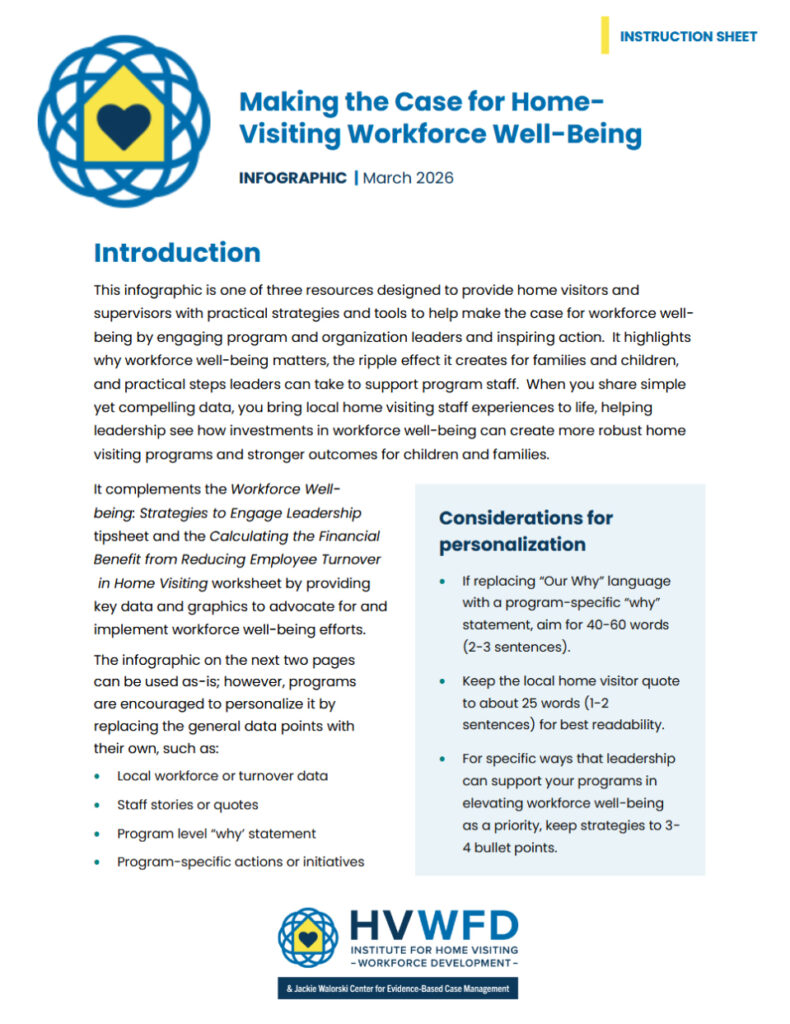
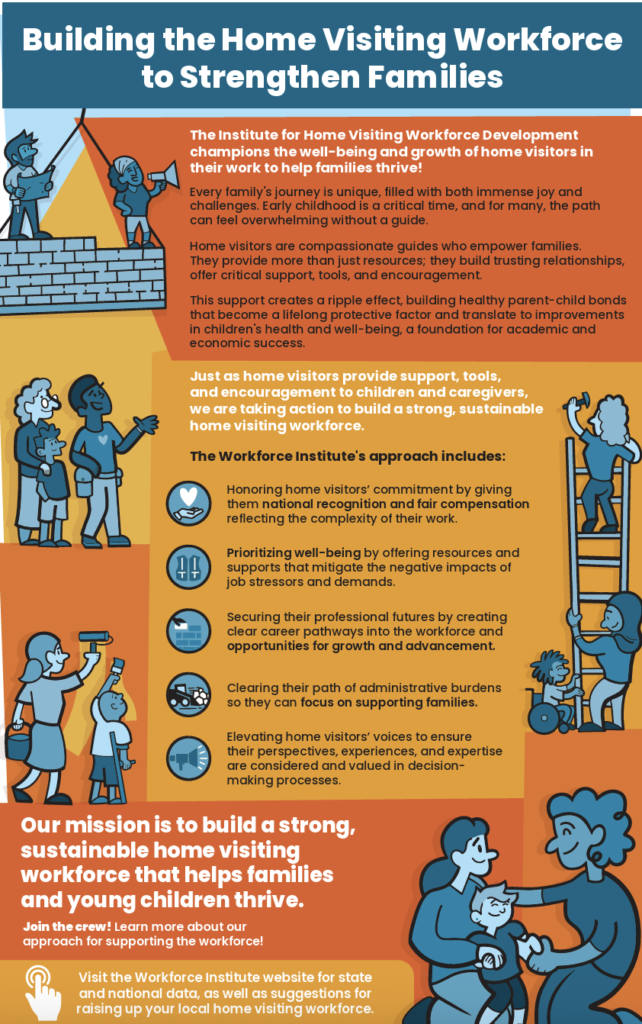
This infographic is one of three resources designed to provide home visitors and supervisors with practical strategies and tools to help make the case for workforce well-being by engaging program and organization leaders and inspiring action. It highlights why workforce well-being matters, the ripple effect it creates for families and children, and practical steps leaders can take to support program staff.
This infographic was built by the home visiting workforce, for the home visiting workforce — and for anyone who wants to understand the vital role these professionals play.
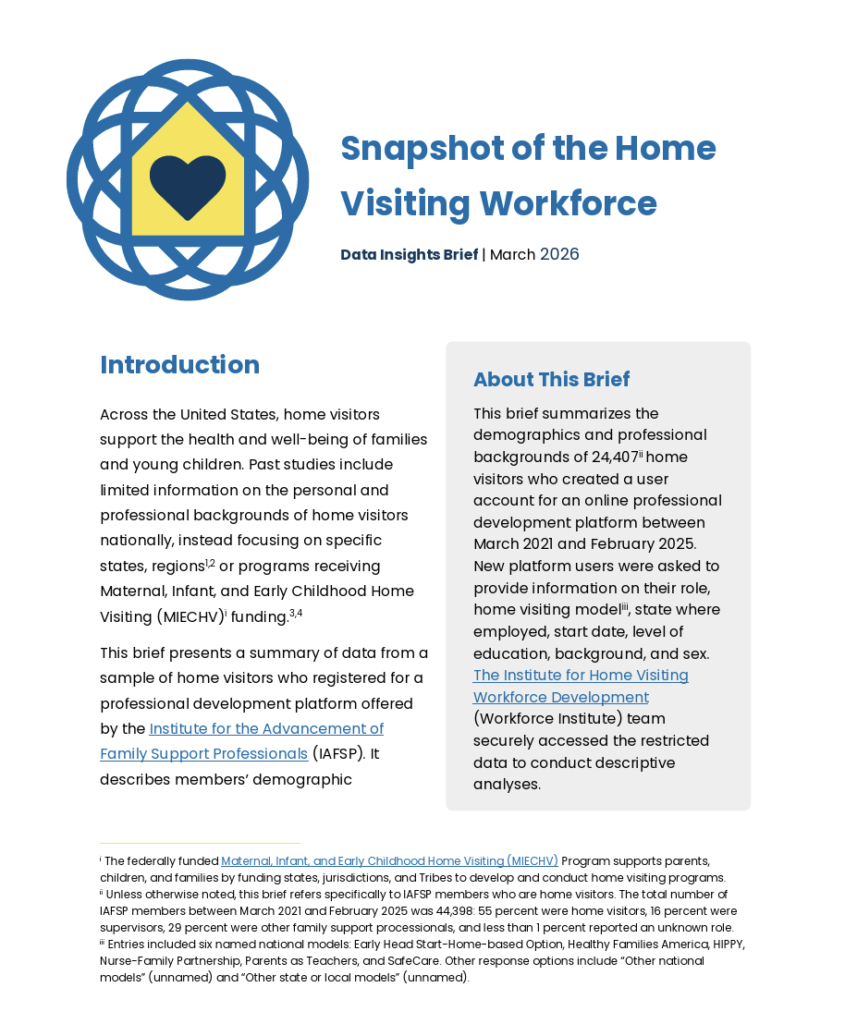
Drawing on data from more than 24,000 home visitors who created accounts with a national professional development platform, the Institute for the Advancement of Family Support Professionals (IAFSP), between 2021 and 2025. It presents a first-of-its-kind descriptive picture of the home visiting workforce across all 50 states and U.S. territories. It covers workforce demographics, educational attainment, and years of experience — offering foundational insights for program leaders, state and network leaders, researchers, and policymakers working to understand and strengthen the workforce.
This data insight brief draws on survey data from more than 500 supervisors working across 49 states and 2 U.S. territories, it presents the most comprehensive national picture of the home visiting supervisor workforce to date. It covers program context, demographic characteristics, educational backgrounds, training in reflective supervision, and years of experience — providing foundational information for program leaders, state and network leaders, model developers, and researchers who want to better understand and support this critical aspect of the workforce.
If you found this brief helpful, please take a moment to complete this survey.
This website uses cookies to improve your experience. We'll assume you're ok with this, but you can opt-out if you wish. Cookie settingsACCEPT
Manage consent
Privacy Overview
This website uses cookies to improve your experience while you navigate through the website. Out of these, the cookies that are categorized as necessary are stored on your browser as they are essential for the working of basic functionalities of the website. We also use third-party cookies that help us analyze and understand how you use this website. These cookies will be stored in your browser only with your consent. You also have the option to opt-out of these cookies. But opting out of some of these cookies may affect your browsing experience. See https://www.edc.org/legal for our full policy.
Necessary cookies are absolutely essential for the website to function properly. This category only includes cookies that ensures basic functionalities and security features of the website. These cookies do not store any personal information.
Any cookies that may not be particularly necessary for the website to function and is used specifically to collect user personal data via analytics, ads, other embedded contents are termed as non-necessary cookies. It is mandatory to procure user consent prior to running these cookies on your website.