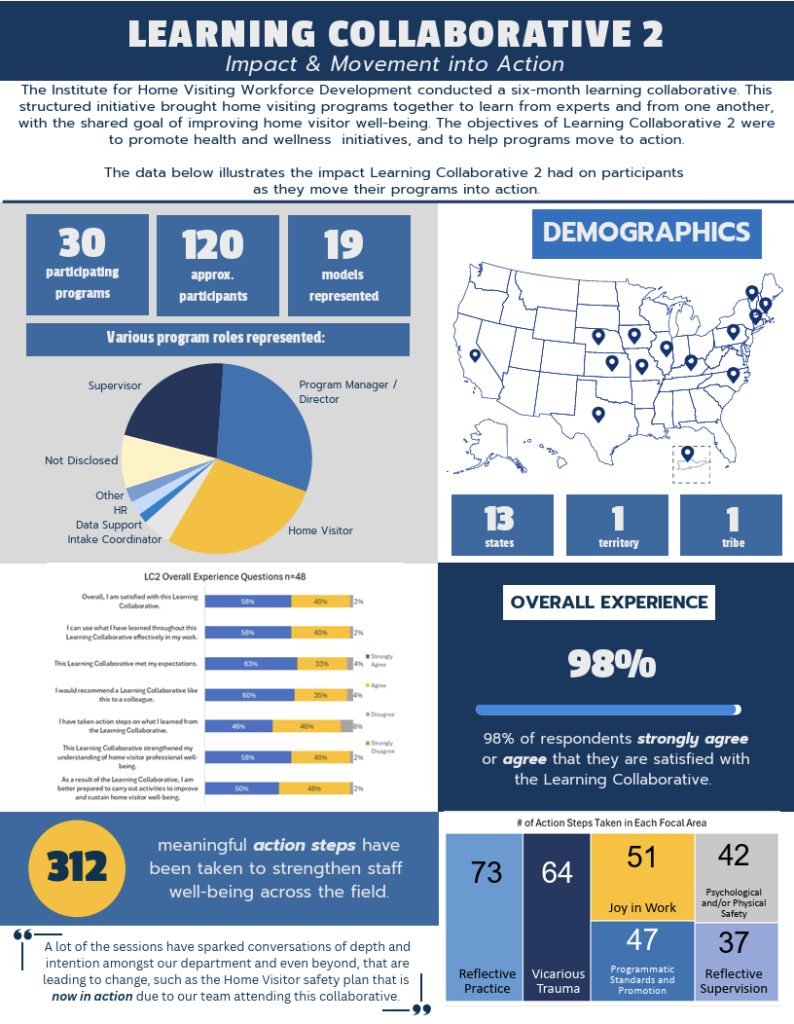
From briefs and toolkits to videos and tip sheets, every resource here was created by our project team to support the people doing this work, informed by the National Strategy for the Home Visiting Workforce. Search by keyword or filter by category to find what’s most useful for your role.
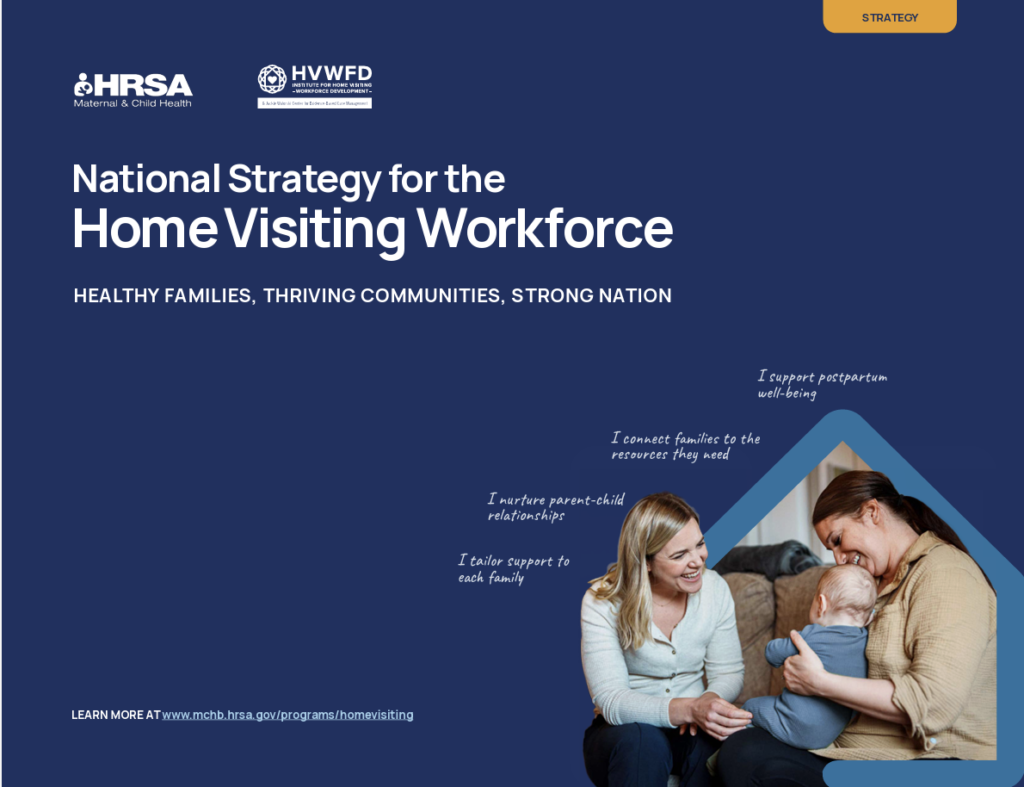
Research shows that home visitors transform families’ lives nationwide. The National Strategy provides a clear, long-term plan—including three key pillars and 15 actions—to position this vital workforce for even greater success, reach, and impact.
This overview details the National Strategy’s purpose, goals, and outcomes. It provides an at-a-glance look at three key pillars and 15 actions that will propel progress in achieving a sustainable, skilled, and supported home visiting workforce.
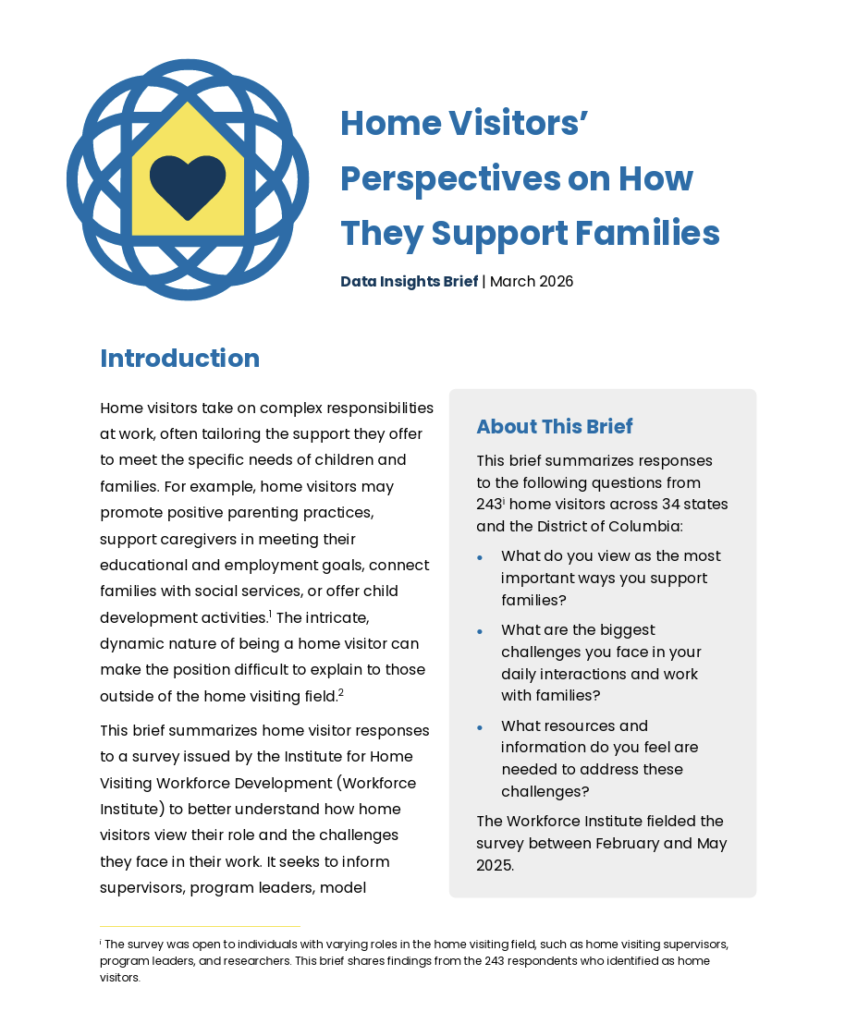
This data insights brief presents new findings from a survey of 243 home visitors across 34 states and the District of Columbia, conducted in 2025. It surfaces home visitor perspectives on the most important ways they support families, the biggest challenges they face daily — including paperwork burden, complex family needs, and secondary trauma — and the structural support, community services, and professional development they say would make a difference. The findings are designed to inform supervisors, program leaders, model representatives, system leaders, and researchers working to strengthen and support the workforce.
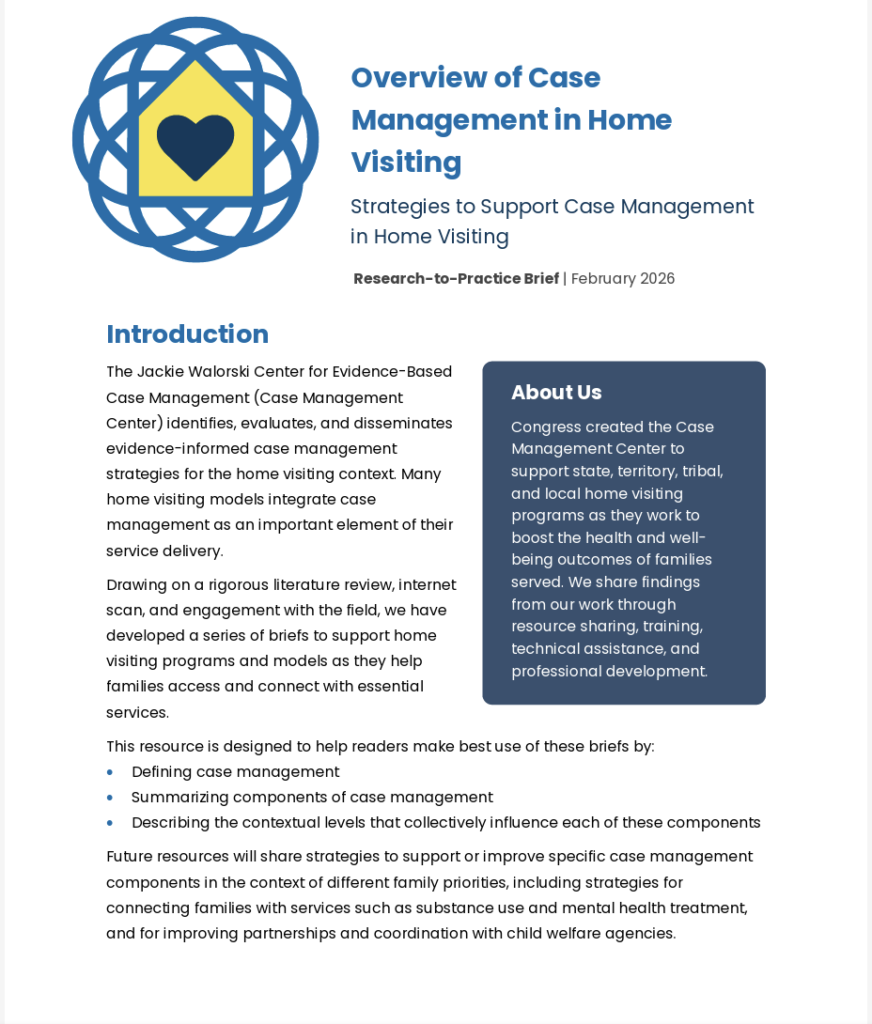
This research-to-practice brief provides a foundational overview of case management in home visiting, including a field-informed definition, six core components, and the system-level factors that influence how programs connect families to services. As the first in a series, it supports state, territory, tribal, and local programs in strengthening their efforts to ensure families access the services and resources they need.
This research-to-practice brief is designed for local program leaders, supervisors, state and network leaders, and model developers who want to take meaningful action to protect and retain their staff. Drawing on a scan of existing literature and resources, as well as voices from the home visiting field, this brief presents concrete, actionable strategies across four domains — policies, practices, resources, and supports — that programs can implement to build a culture of safety.
Home visitors do essential work — but too often, that work goes unrecognized. Our latest research-to-practice brief makes the case for meaningful staff recognition and offers practical, low-cost strategies program leaders can use to help home visitors feel valued and supported. It highlights how small, intentional efforts can improve morale, retention, and overall program impact.
This research-to-practice brief is designed for local program leaders, supervisors, state and network leaders, and model developers looking to strengthen their workforce by investing in peer connection. Drawing on a scan of existing literature and voices from the home visiting field, this brief presents strategies across three areas — peer relationships in the workplace, peer support structures, and peer connections across the field — that programs can tailor to meet the needs of their staff.
This website uses cookies to improve your experience. We'll assume you're ok with this, but you can opt-out if you wish. Cookie settingsACCEPT
Manage consent
Privacy Overview
This website uses cookies to improve your experience while you navigate through the website. Out of these, the cookies that are categorized as necessary are stored on your browser as they are essential for the working of basic functionalities of the website. We also use third-party cookies that help us analyze and understand how you use this website. These cookies will be stored in your browser only with your consent. You also have the option to opt-out of these cookies. But opting out of some of these cookies may affect your browsing experience. See https://www.edc.org/legal for our full policy.
Necessary cookies are absolutely essential for the website to function properly. This category only includes cookies that ensures basic functionalities and security features of the website. These cookies do not store any personal information.
Any cookies that may not be particularly necessary for the website to function and is used specifically to collect user personal data via analytics, ads, other embedded contents are termed as non-necessary cookies. It is mandatory to procure user consent prior to running these cookies on your website.